Dundale Shopping Centre bombing
Noughts & CrossesThe Dundale Shopping Centre bombing is the novel’s decisive rupture between the Liberation Militia’s stated political cause and the lethal consequences of its actions. The attack kills at least seven people and wounds scores more; its aftermath exposes Jude’s involvement, leads Ryan to take responsibility, and leaves Callum carrying the knowledge of what happened. The bombing also brings Callum and Sephy together in a moment of escape and survival, even as it sets in motion losses and choices that later define their lives.
Background and warning
The plot brings the bombing into view through Callum’s growing recognition that the Liberation Militia is planning an operation at the Dundale. Jude knows more than he has told Callum and warns him away, but Callum realizes that Sephy is at the shopping centre. The discovery turns an abstract suspicion into an urgent personal crisis: Callum is not merely trying to understand the group’s plans; he is trying to reach Sephy before they take effect.
Jude later explains that his cell was ordered to carry out the operation. Some members prepared it the night before, and they expected a warning to be telephoned an hour before the explosion so that the building could be evacuated. He says the cell was assured that everyone would have time to leave. Instead, the public report says a warning from the Liberation Militia arrived only five minutes before the bomb exploded. The gap between the promised hour and the reported five minutes helps explain why the attack caused mass casualties, while Jude’s bewilderment indicates that he had not expected the warning to fail in this way.
The explosion and escape
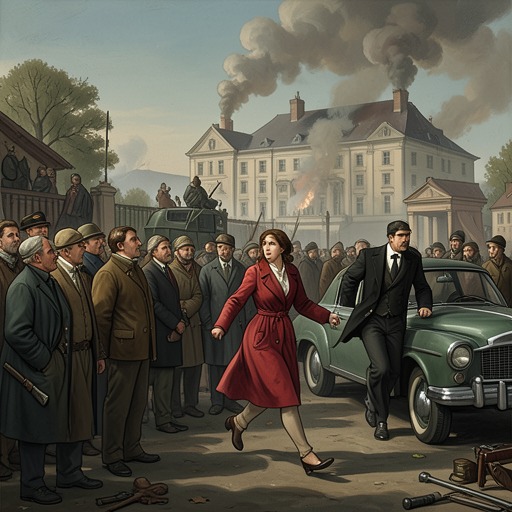
At the shopping centre, Callum and Sephy move toward an exit as people around them begin to flee. Callum has found Sephy after searching for nearly half an hour, and he continues urging her to run. They are among the first to get outside. The escape is not a safe ending: shortly afterward, the bomb explodes, and the blast throws Sephy down while Callum is beside her. When the initial shock passes, smoke is coming from the shopping centre, followed by screams and sirens. Callum checks whether Sephy is all right.
The sequence sets immediate survival against the scale of the disaster. Callum’s effort to get Sephy out succeeds in removing them from the building before the explosion, but they are still close enough to be caught by its force. For Sephy, the event is experienced not as distant political news but as a catastrophe she has just escaped. For Callum, finding her and getting her outside gives his actions a protective purpose, while the bombing makes clear that he cannot control the danger created by the organization he has joined.
Public account and discovery of Jude’s role
The news announces that at least seven people have been killed outright and scores more wounded. Casualties are being taken by ground and air ambulances to local hospitals, which have been placed on full alert. The report identifies the Liberation Militia as the source of a warning received five minutes before the explosion. Jude rejects that account, and later tells his parents that his cell believed a warning would be sent an hour in advance and that the public would be evacuated in time. His explanation does not undo the deaths or settle who failed to pass on the warning; it shows the distance between what the cell was told and what happened.
The family’s uncertainty gives way to forensic evidence. Ryan tells Meggie that investigators found two of Jude’s fingerprints on a cola-can fragment in the bin where the bomb went off. He then explains that a print was also found on a surviving part of the bomb casing and that the prints match. The discovery identifies Jude as the bomber and transforms the family’s response from suspicion into knowledge. The cola can and the casing fragment, ordinary remnants of the scene, become evidence connecting a family member to the attack.
Investigation and consequences
The bombing brings Callum under police questioning about his brother and the Liberation Militia. Exhausted, he denies that his brother belongs to the organization and is pressed to identify which cell he belongs to. The investigation thus reaches beyond the person who built or planted the bomb: it places Callum’s associations and knowledge under scrutiny as well.
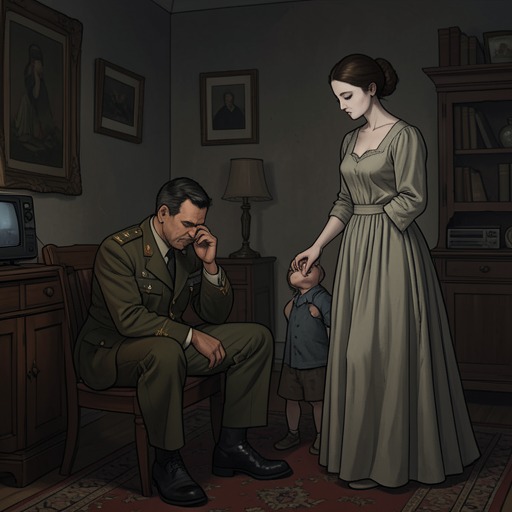
Ryan’s response becomes a second major consequence. At his trial, when he is asked to plead to political terrorism, Callum calls out for him not to do it. The outburst prompts a warning from Judge Anderson, but it also reveals Callum’s recognition that the proceeding is a farce in which his father is taking responsibility. Ryan’s battered appearance and sadness, as Callum sees him in court, intensify the personal cost of the bombing’s aftermath. The false confession redirects the case away from Jude and toward Ryan, with devastating consequences for the family.
Long aftermath and significance
The bombing’s effects continue to shape Callum long after the immediate investigation. He later describes starting near the bottom of the Liberation Militia’s ranks, moving from tea boy to grunt and then through successive ranks to sergeant in a cell of six men and three women. His rise within the organization brings him the contacts and resources to retaliate against three students who had beaten Sephy at Heathcroft. He plans and carries out that retaliation as personal business, linking the violence of the bombing’s political world to his own growing participation in revenge. He recognizes that he loses more of himself in the process and contrasts the person he has become with the Callum who once loved sitting on the beach at sunset.
The bombing also foreshadows the Militia’s later use of captivity and ransom. When Sephy is held in a cabin, Jude and Pete have planned the operation in advance, obtained permission from the General, and arranged guards and a relay of telephone calls. The group intends to use ransom money to fund future activity and to demand the release of five imprisoned members, three of whom are key members rather than the underlings officials expect. This later scheme is not the bombing itself, but it shows the organization continuing to combine political demands with coercive violence.
For Sephy, the bombing remains part of a wider history of racial conflict, bereavement, and responsibility. Much later, in a confrontation with Jude, she says that her family stood by while Callum died and blames herself for not having saved him. Her grief turns the earlier escape into an episode whose brief survival does not protect either of them from what follows. The bombing matters both as a mass-casualty attack and as the hinge connecting public violence to private guilt, family betrayal, and the characters’ changing involvement in the Liberation Militia.